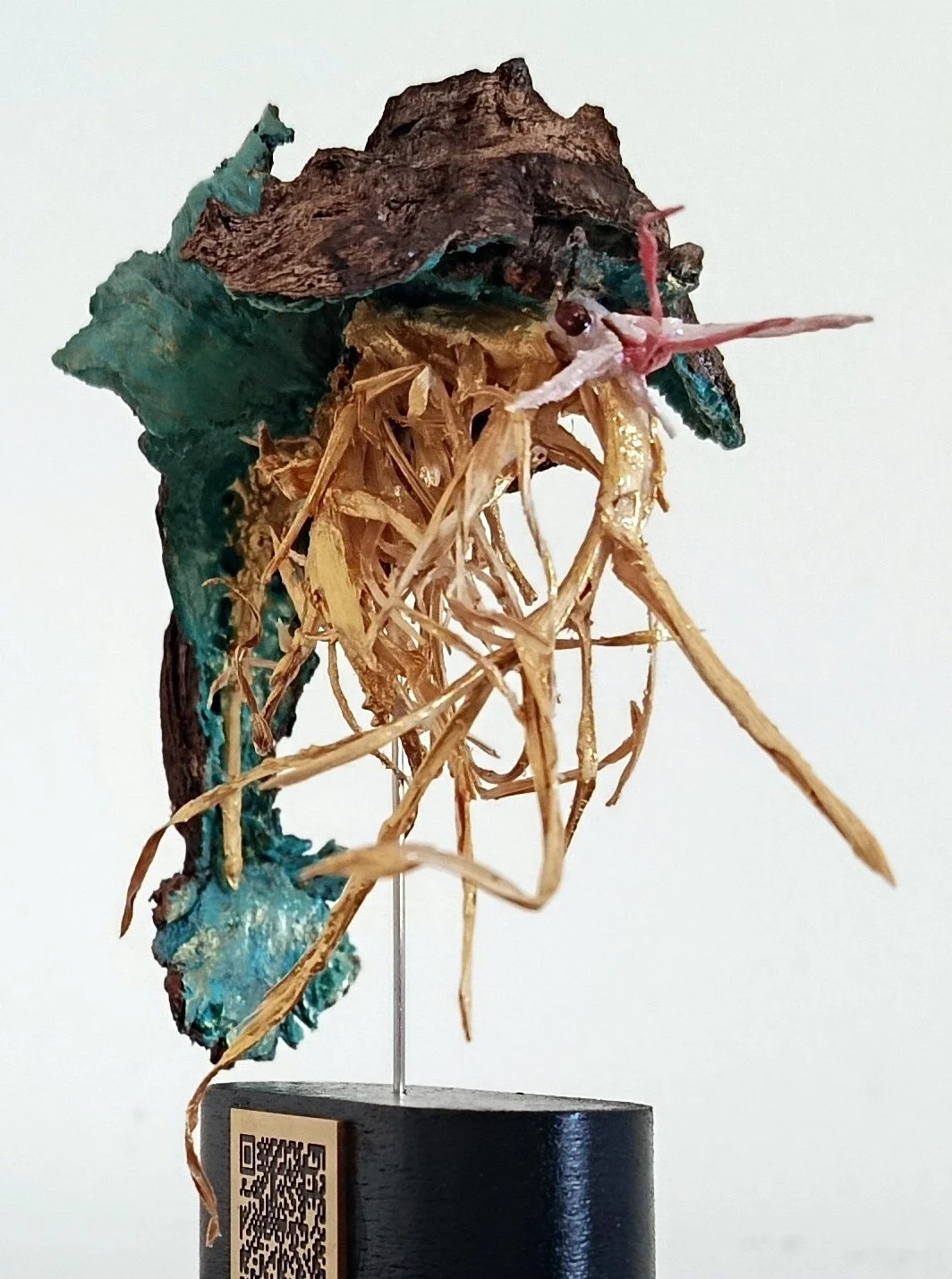
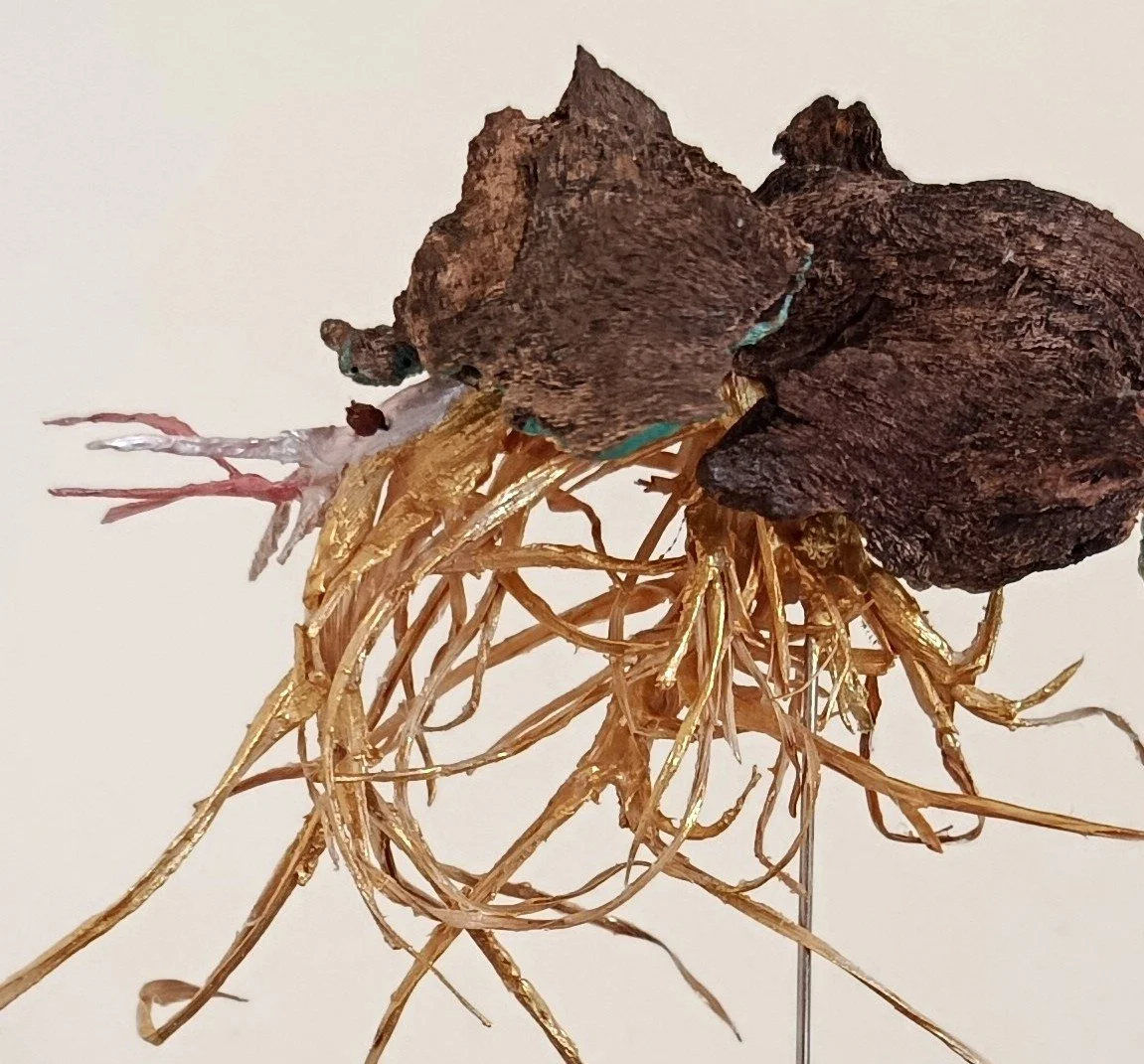
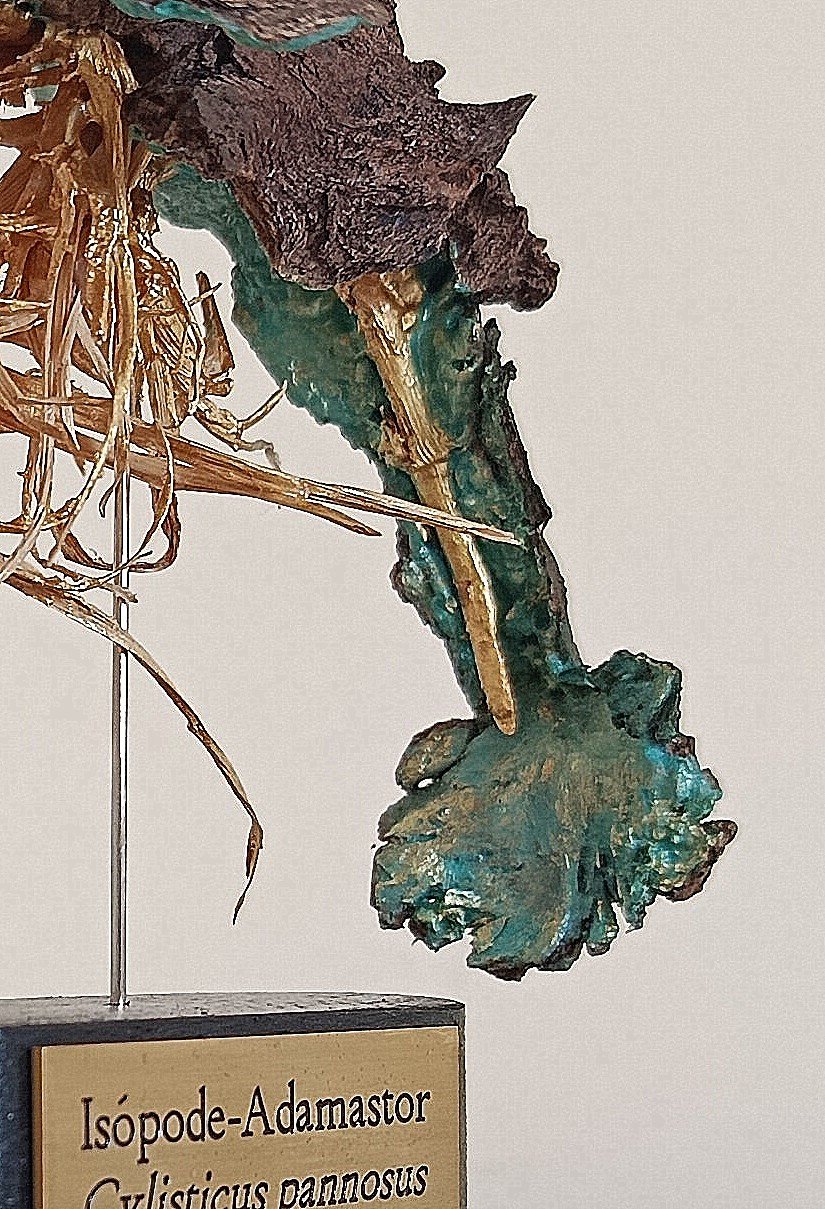
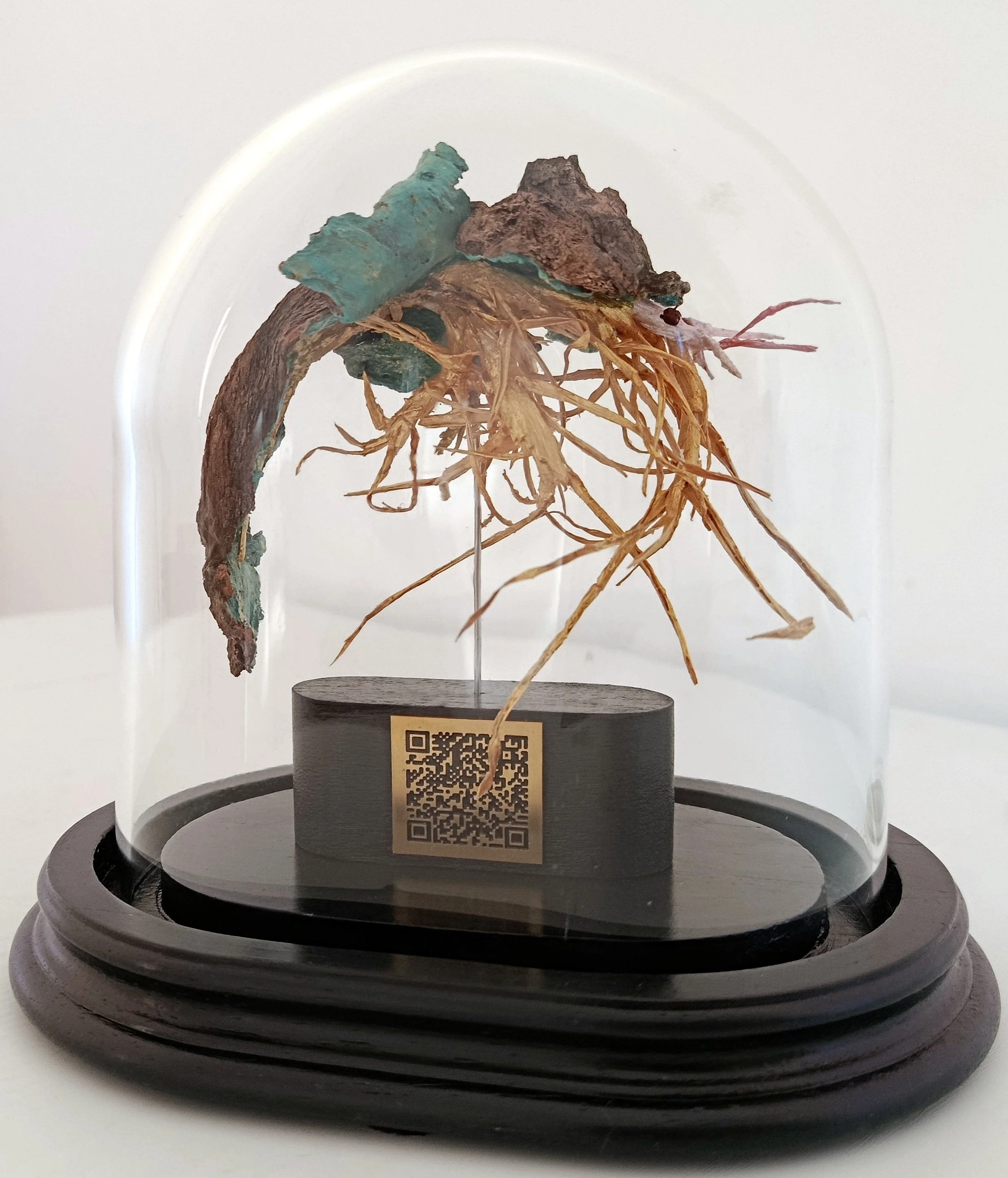
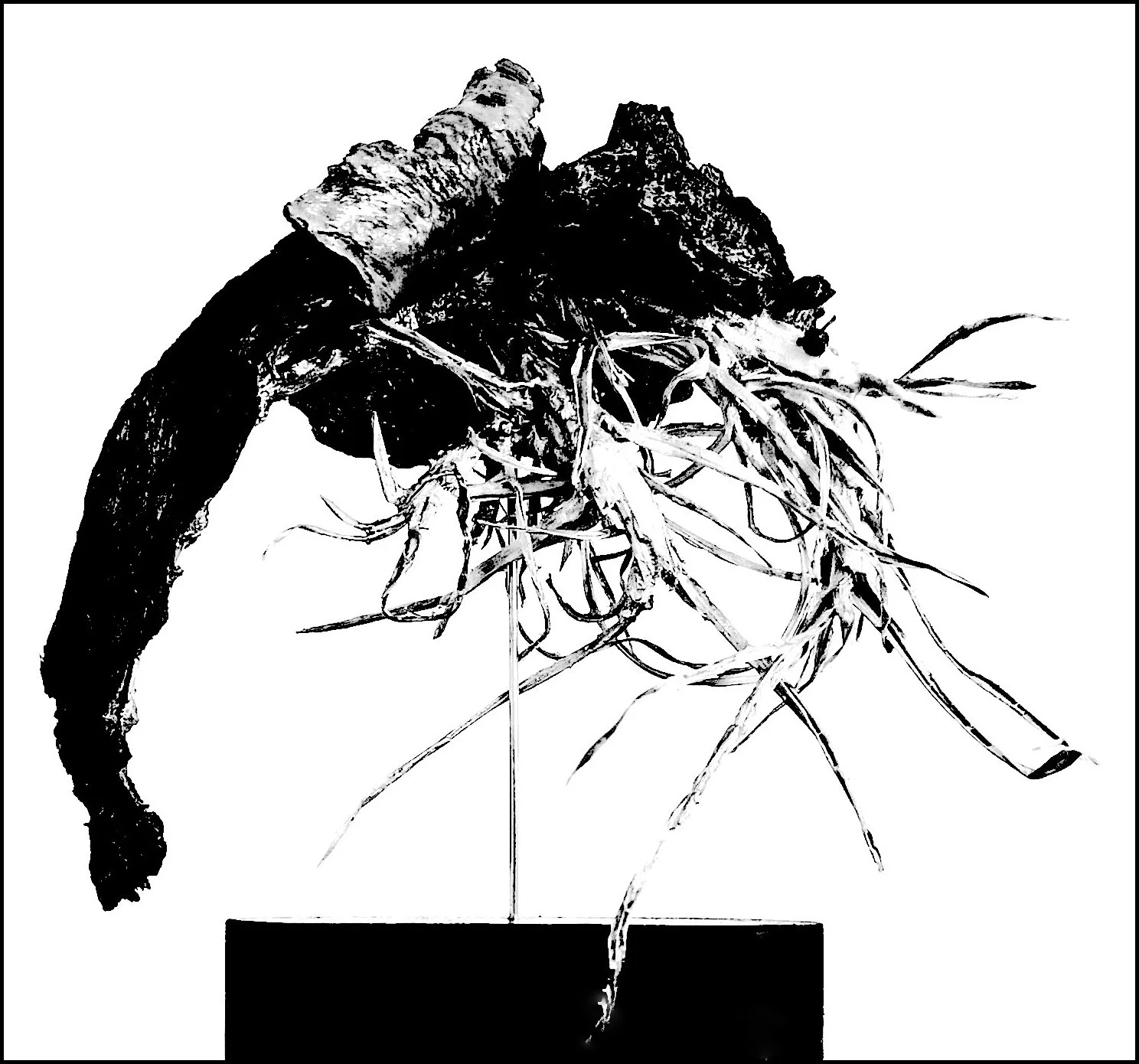
Common Name: Isópode-Adamastor
Latin Name: Cylisiticus pannosus
Specimen Length: 188 mm
Specimen Sex: Female
First Described: AD 2094
Description and Habitat: Cylisiticus pannosus is found throughout mainland Portugal, existing between land and sea along its ever-widening shorelines, having evolved to successfully navigate the waterlogged environment caused by frequent storms and eroding soil quality due to climate change. Initially thought to be a sea roach or a type of shrimp, it is genetically closer to a teardrop woodlouse, and so exhibits partial rolling, although its antennae, legs and uropods remain visible. The Latin word pannosus, meaning ragged, refers to its lumpy, asymmetrical exoskeleton, but whilst its irregular appearance may seem humble, its namesake “Adamastor” is not: created by the 16th century poet Luís de Camões, Adamastor is a mythological character, a giant that represents the formidable forces of nature, particularly the dangers at sea that were ultimately overcome by the Portuguese travellers during the Age of Discovery.
C. pannosus plays a significant role in the ecosystem as a detritivore, not only consuming decomposing plant material, but also marine debris including microplastics, as they have evolved the capacity to digest petroleum derived polymers, helping to recycle nutrients back into the soil, thus acting as an important decomposer.
Reproduction: Isópode-Adamastors procreate via sexual reproduction. Courtship behaviour is minimal, males simply using subtle chemical signals and touch to identify a receptive female. Males possess a modified appendage on their underside which they insert into the female, depositing sperm into a specialized internal compartment which allows a single successful copulation to fertilize multiple successive broods without the female needing to mate again. Fertilized eggs are carried in a ventral brood pouch, called a marsupium, until they hatch, protecting the tiny translucent mancae until environmental conditions are dry enough for them to emerge. Offspring are considered mature after their first molt.
Life Span: Up to three years.