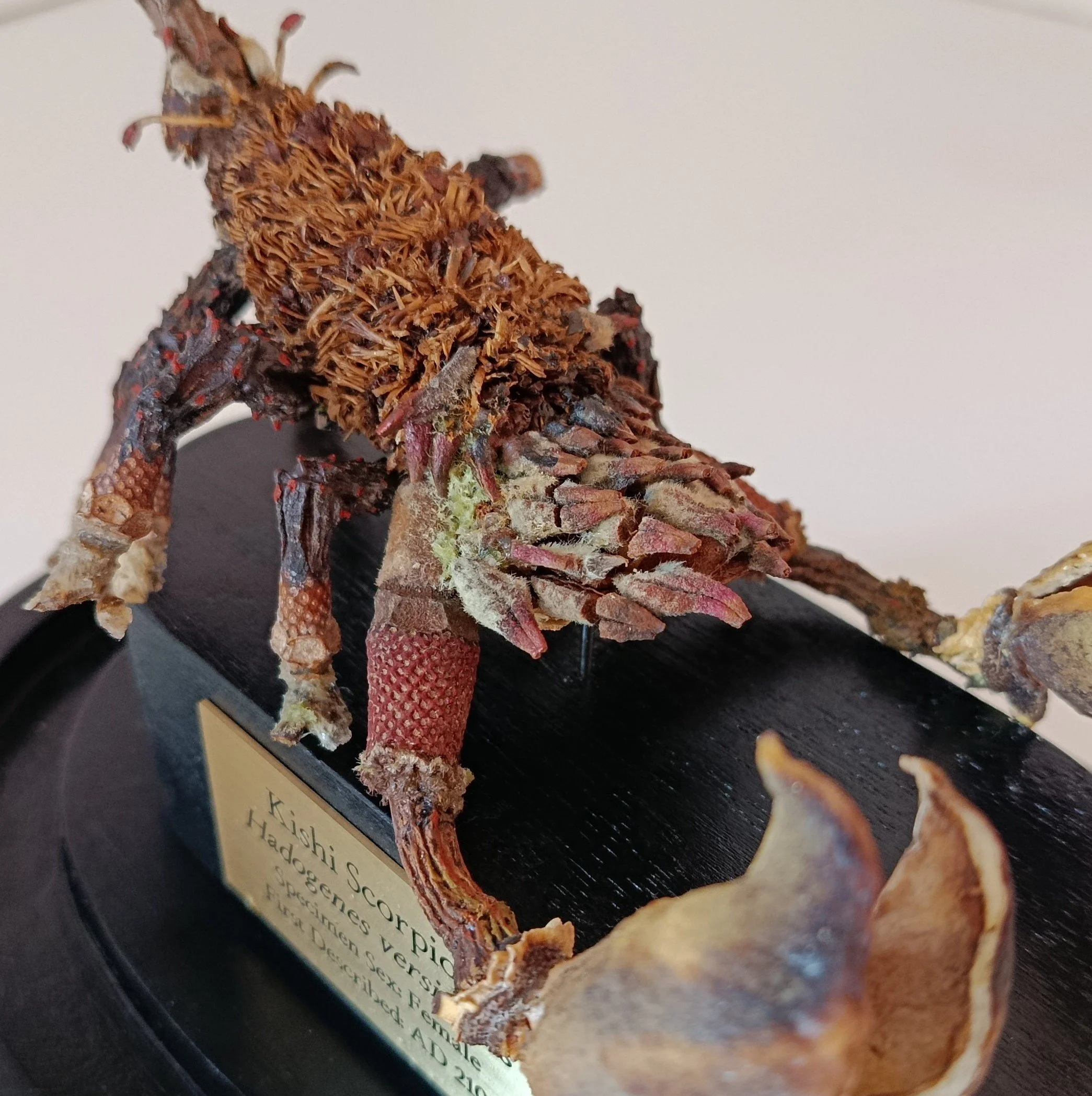
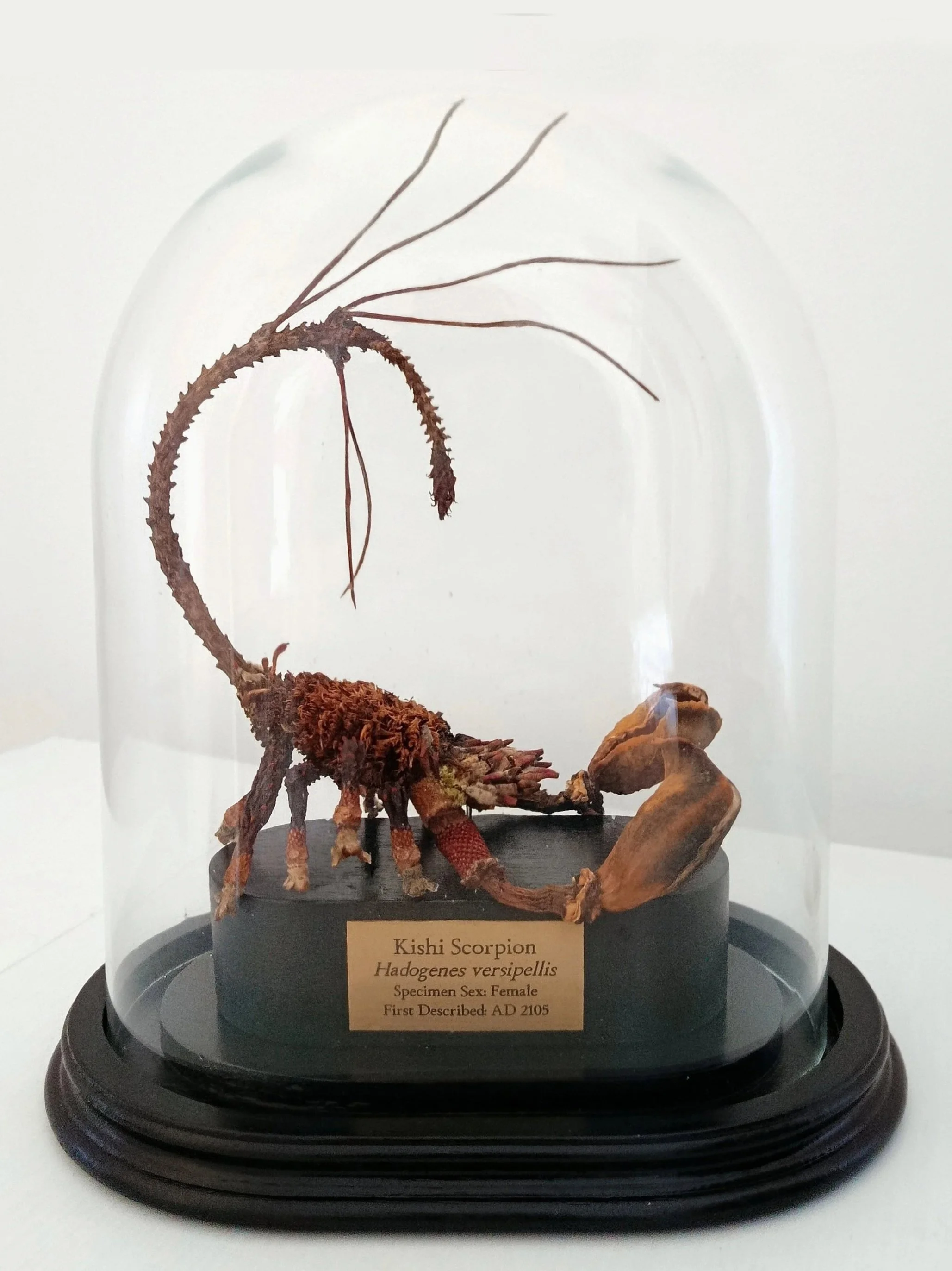
Common Name: Kishi Scorpion
Scientific Name: Hadogenes versipellis
Specimen Length: 332 mm (not including claws)
Specimen Sex: Female
First Described: AD 2105
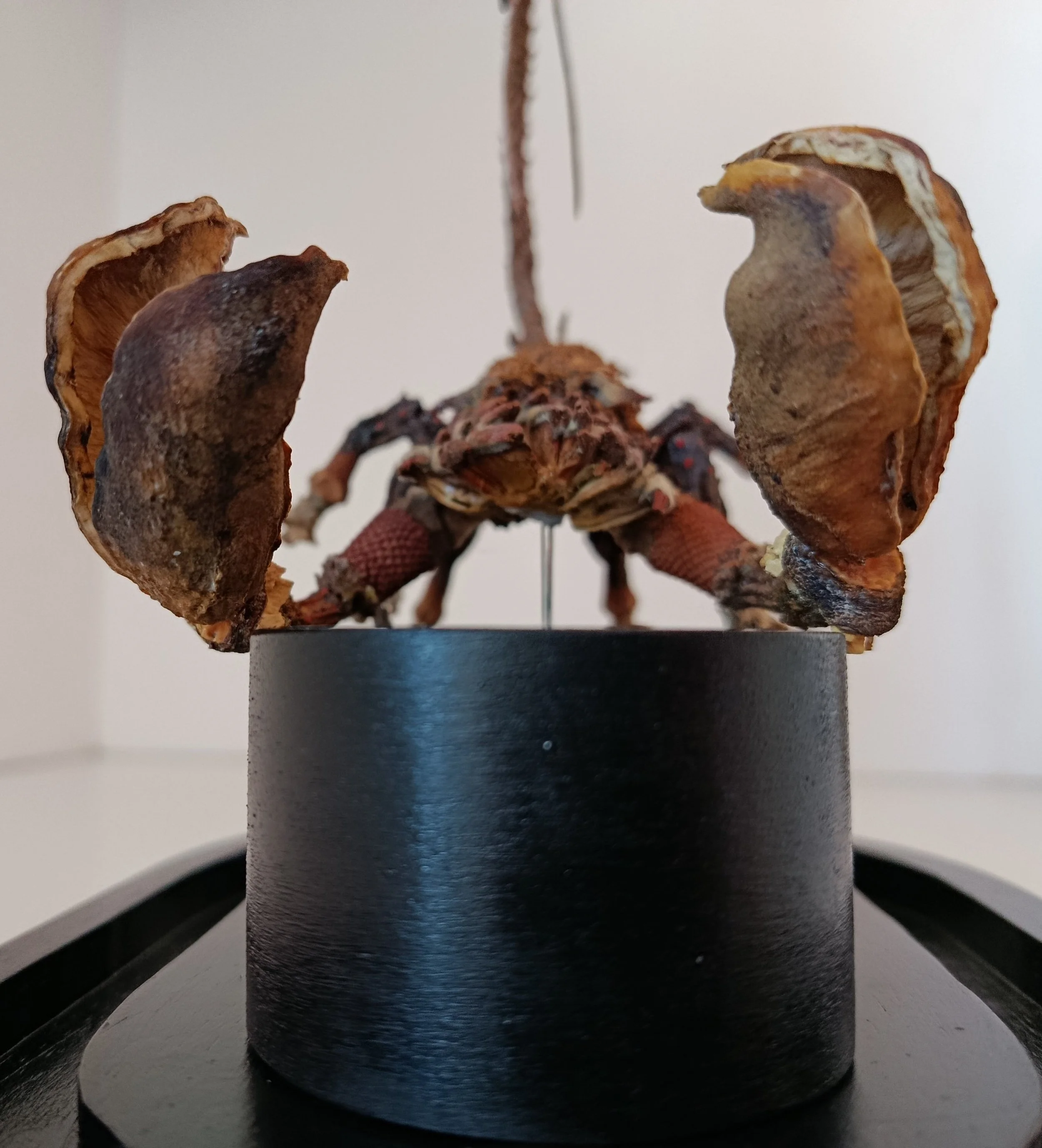
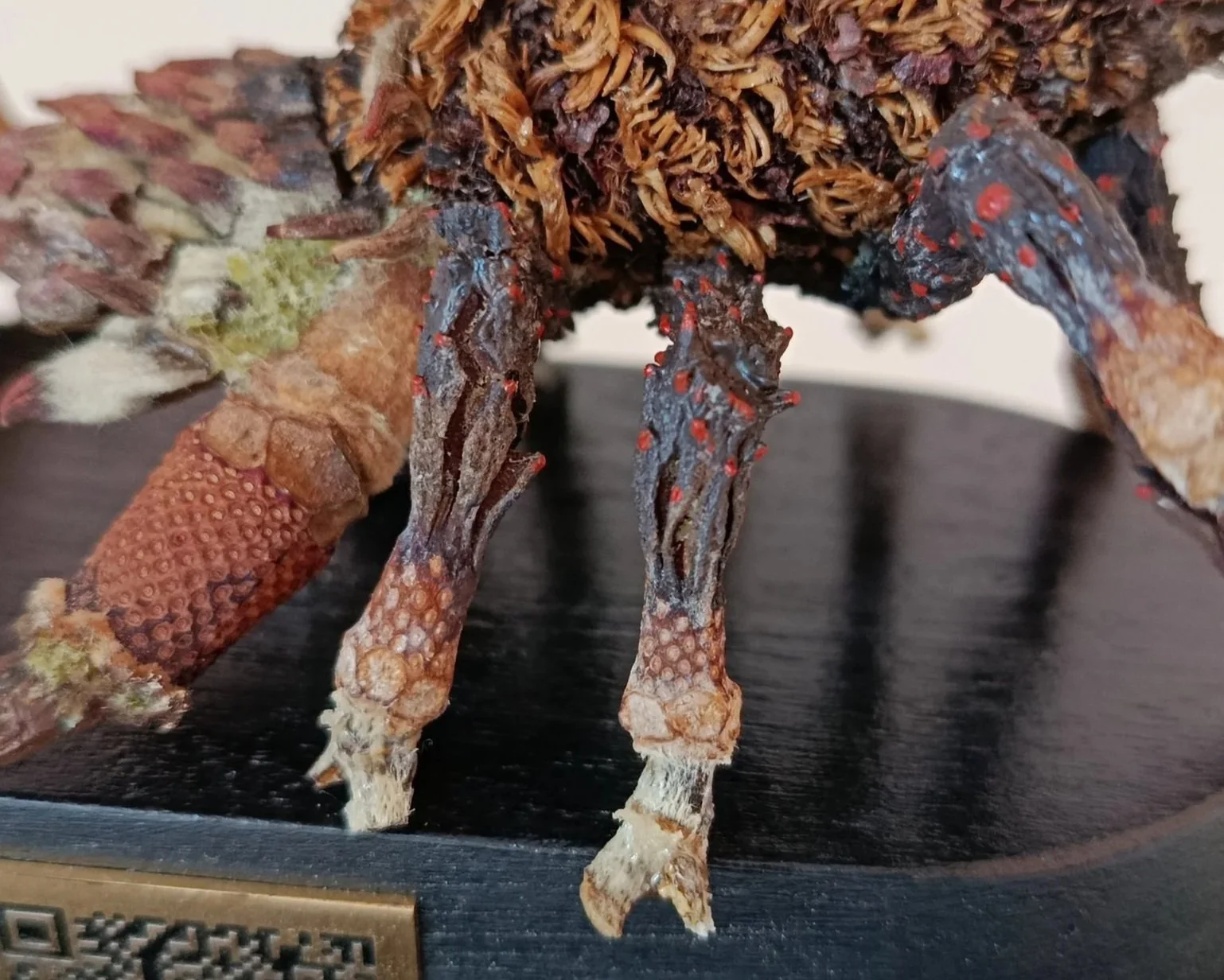
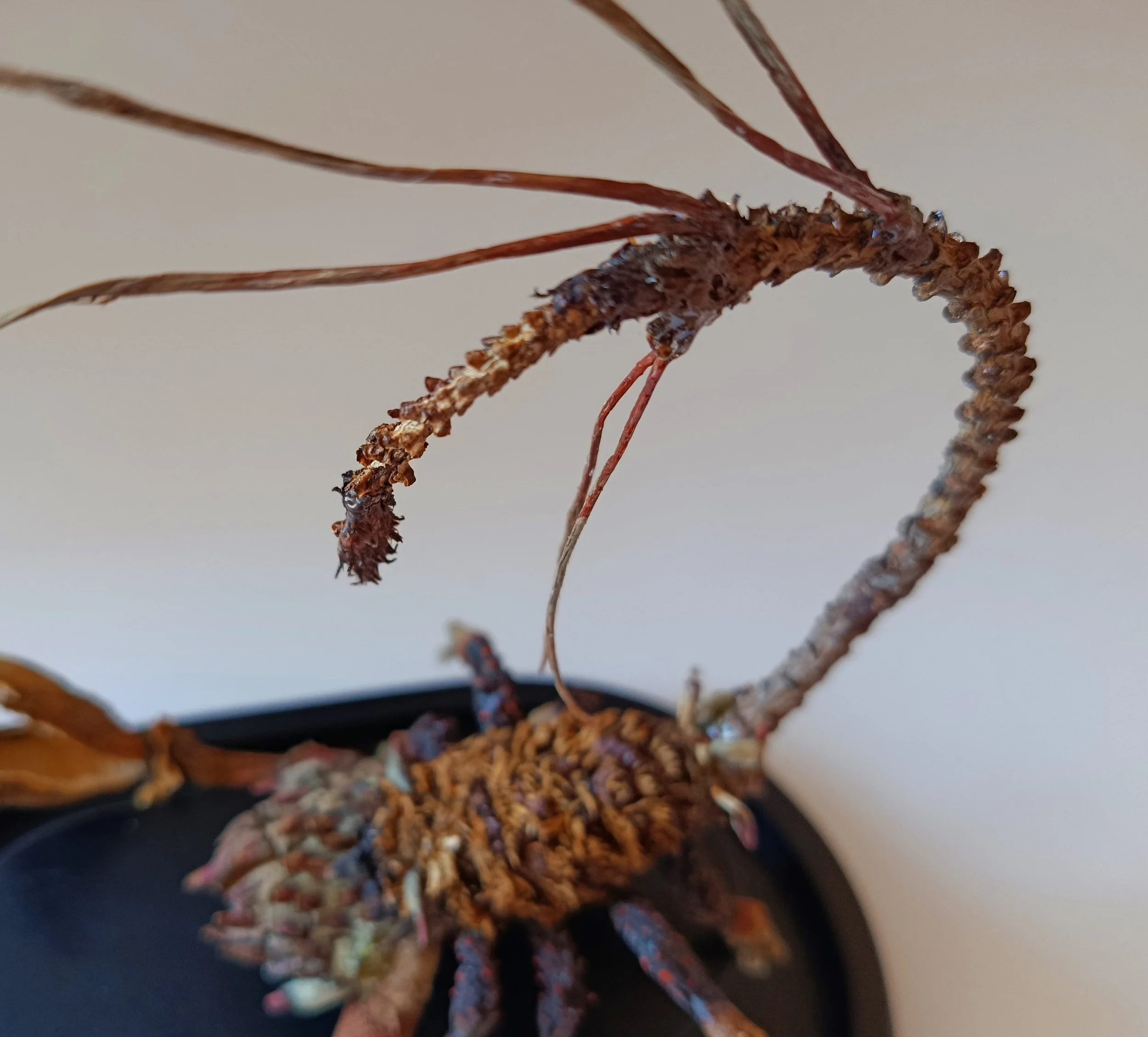
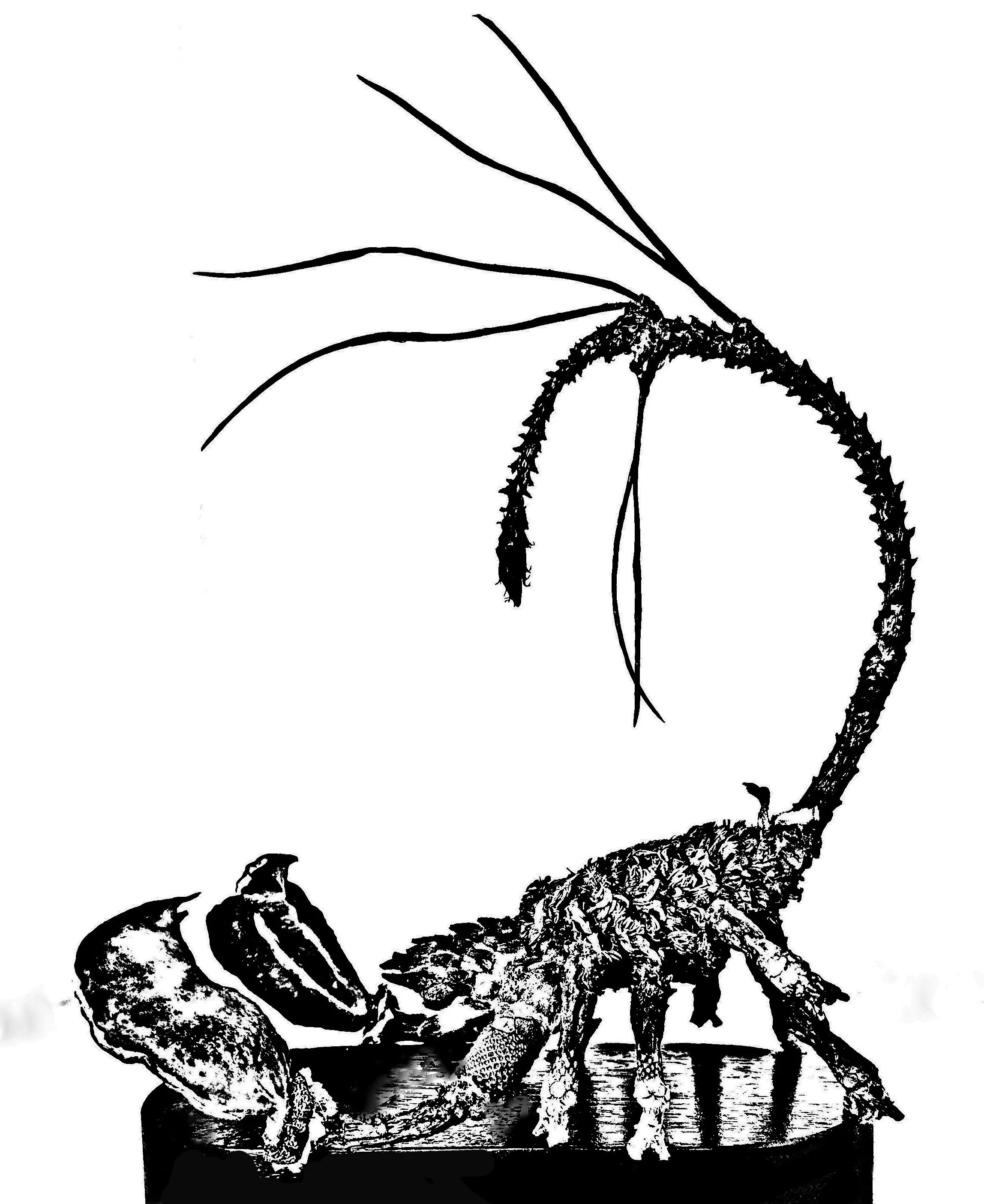
Description and Habitat: A descendant of the giant flat rock scorpion, so named because its dorso-ventrally compressed body is suited to hiding amongst rocks, Hadogenes versipellis has evolved further morphing abilities, allowing it to react quickly to the rapid changes in its habitat, from extreme heat, radiation and fogs of vapor from the surrounding evaporative cooling systems. The word “Kishi” means a shapeshifting trickster in Angolan folklore, where this extraordinary beast is found; it can expand and retract its girth, legs can flatten out and claws are made of highly flexible radiation-deflecting skin that balloon into shields when high-frequency voltage transients are detected. Once only found in rocky outcrops, Kishi Scorpions are now prevalent throughout Angola, existing amongst the vast data centres dominating the country, land that was once covered in forests, grasslands, wetlands or farmland, but now cleared for the concrete and metal AI-Hyperscaler constructions covering most of the continent. Whilst the International Commission on Non-Ionizing Radiation Protection (ICNIRP) stipulated no mammalian life should be exposed to current levels, monitoring and enforcement cannot effectively uphold the legislation and so resident animals are finding ways to survive the particulate radiation and the ever-developing wave–particle duality. H. versipellis has an extremely slow metabolic rate, feeding infrequently on crickets and other small insects, but can go months without food if necessary, especially when environmental conditions are inhospitable.
Reproduction: Kishi Scorpions display a furious but short courtship display, moving quickly whilst attempting to grab each other’s pinchers. Once the male has dropped its spermatophore, the female takes it into her genital compartment for safe keeping, waiting to fertilise the eggs and then give birth, depending on how high the exposure to fluctuating radioactive particulates is at any given time. Sexual dimorphism is usual, the females significantly larger than the males due to carrying their young on their body (or inside their ballooned claws if electro-magnetic levels spike) until their first molt after approximately 20 days.
Life Span: Up to 25 years.