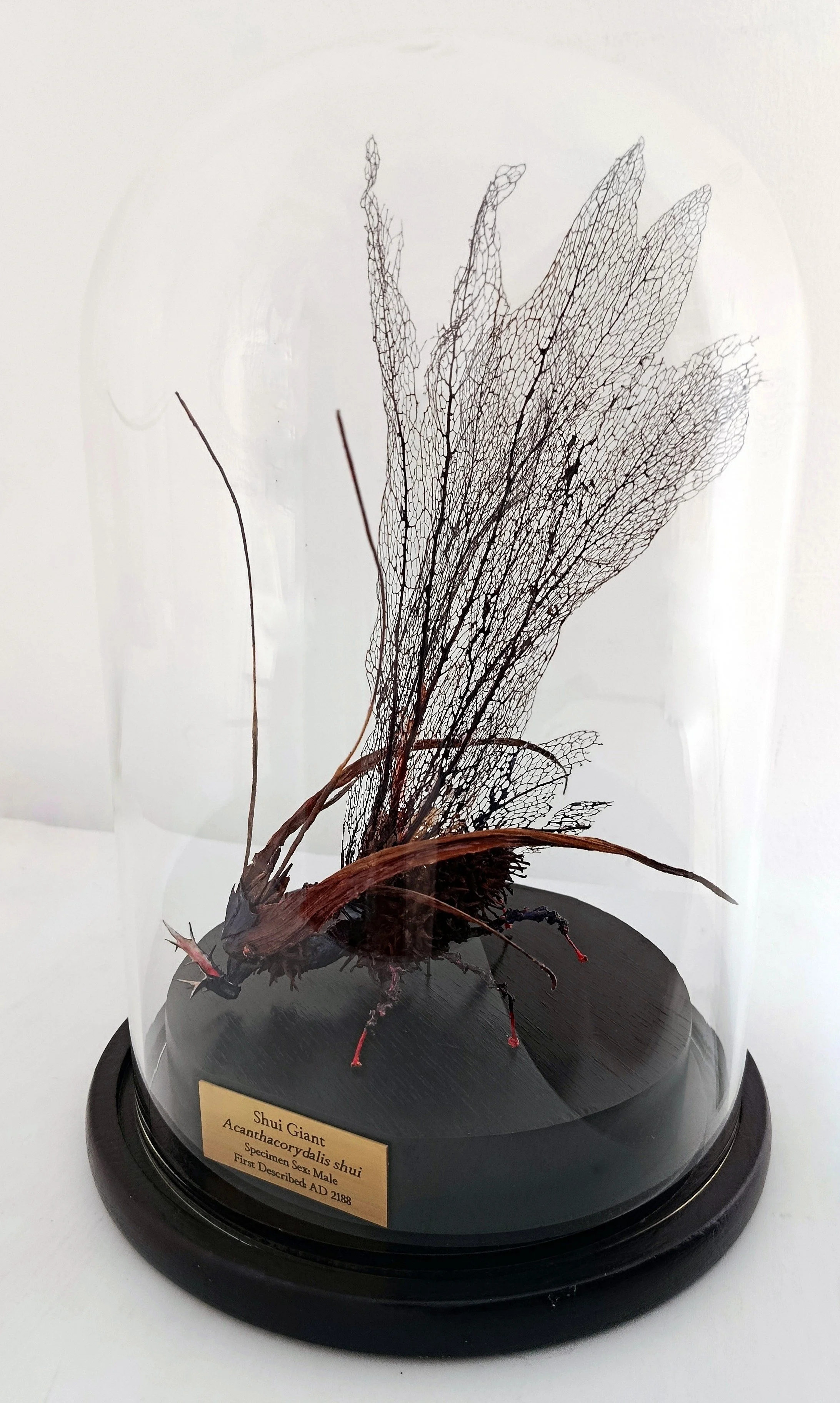
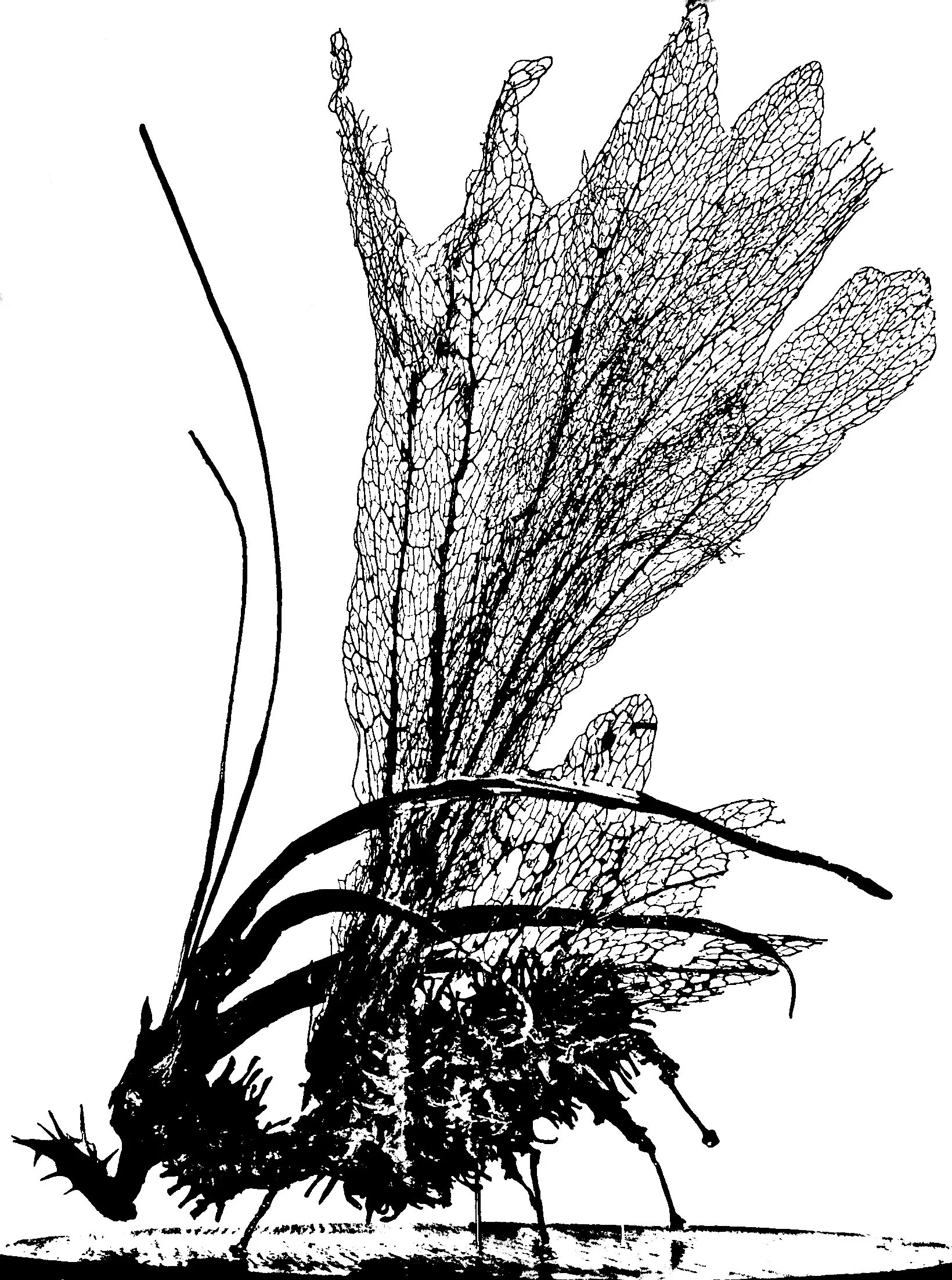
Common Name: Shui Giant
Latin Name: Acanthacorydalis shui
Specimen Length: 298 mm
Specimen Sex: Male
First Described: AD 2188
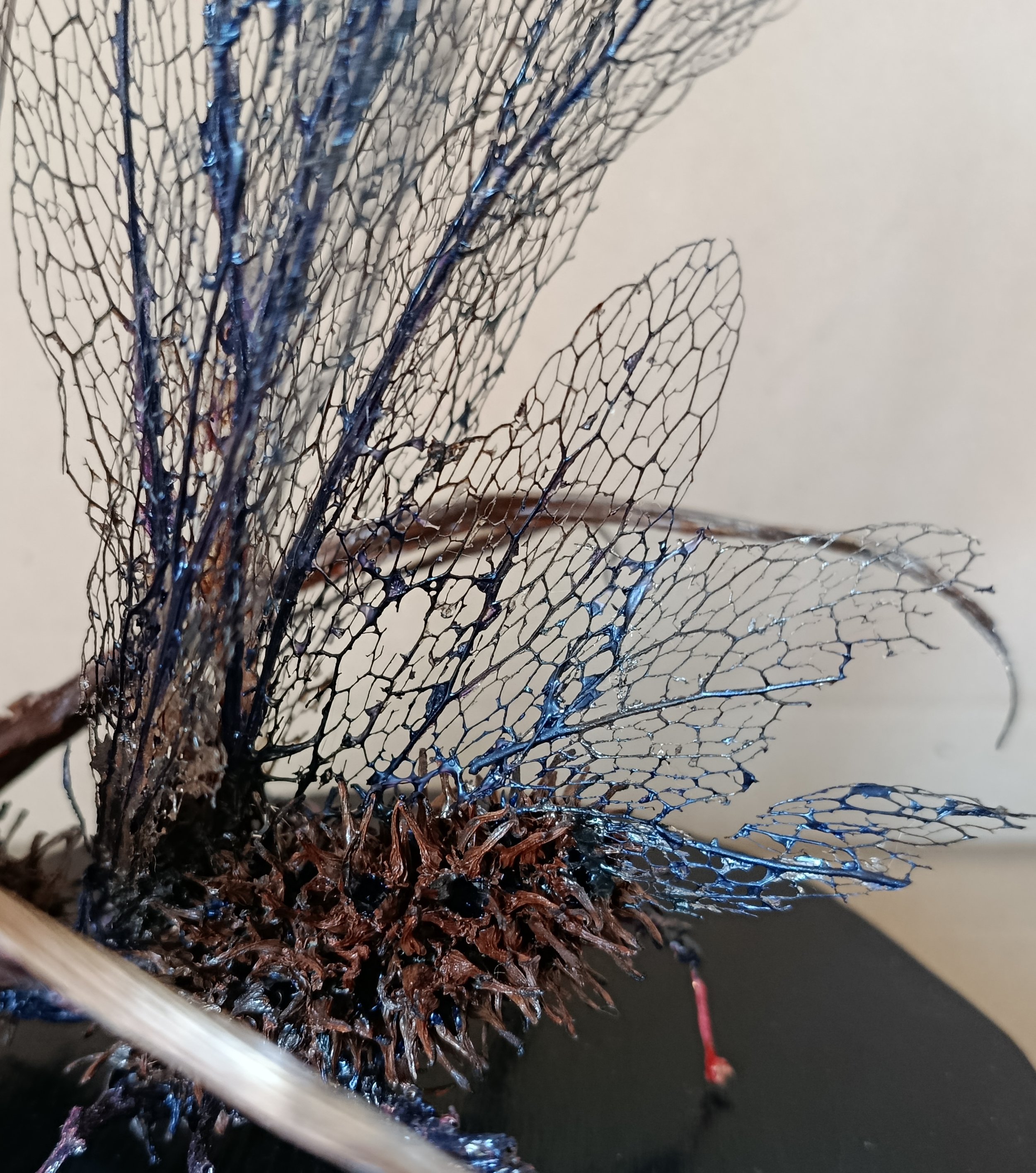
Description and Habitat: As one of the world's largest aquatic insects, with a wingspan reaching up to 500 mm, the Shui Giant is found in large numbers worldwide, most common near rivers and streams in heavily forested environments with high concentrations of oxygen. A subspecies of Acanthacorydalis fruhstorferi, A. shui is highly sensitive to environmental conditions and only started to evolve once human activity had completely ceased. The subsequent rewilding of previously described “urban” environments, rehabilitation of other human-inhabited areas, and in time the complete cleansing of the entire planet allowed this magnificent insect, along with all other non-human species to reach their full potential.
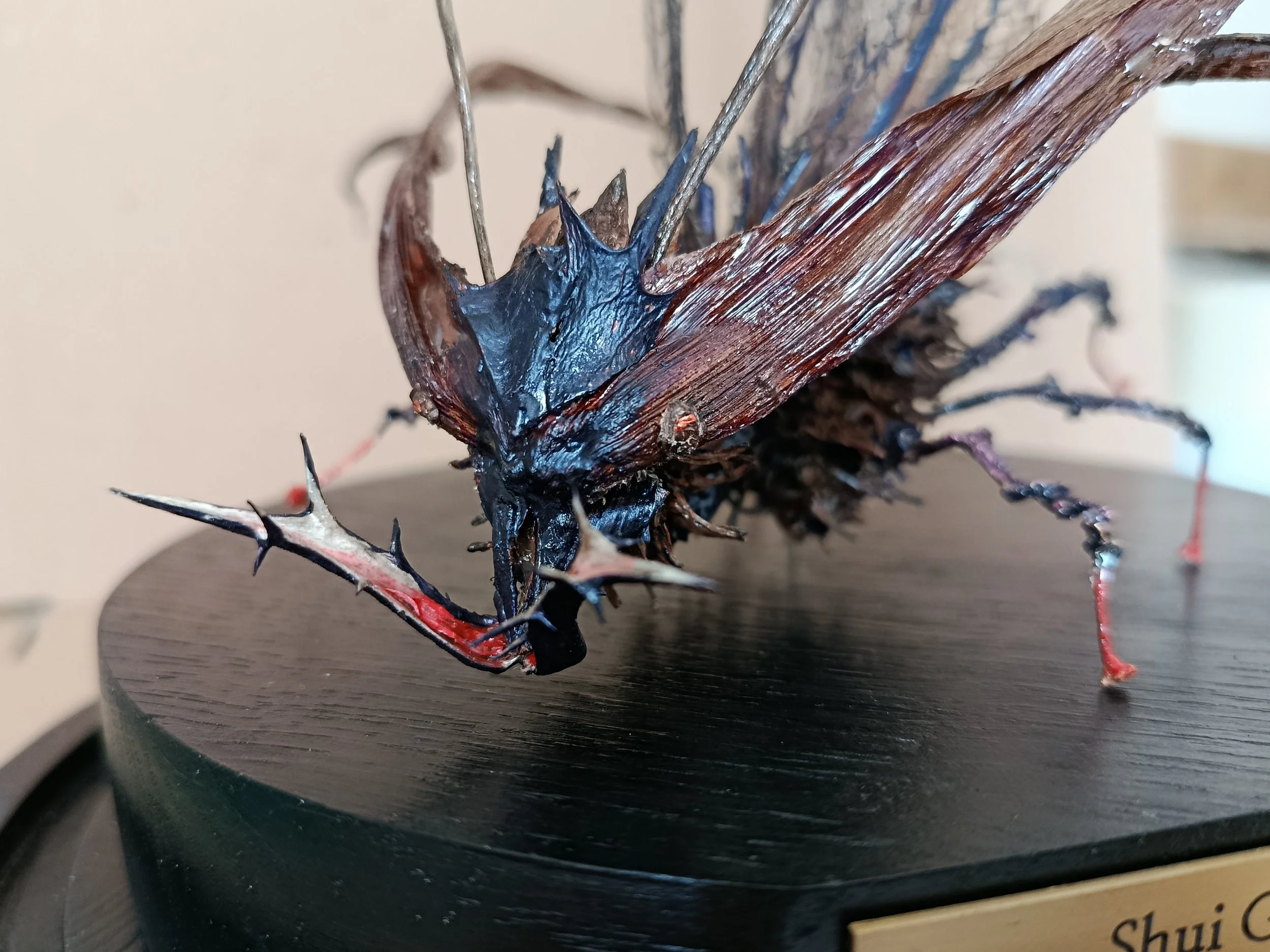
Reproduction: Because their adult life stage is brief and focused entirely on reproduction rather than feeding, mating revolves around intense physical competition. Males engage in fierce combat, using their spiked jaws to grasp, pierce and chase off opponents. Once established as the victor, the male approaches the female, gently touching her with his antennae to signal intent. As soon as she acquiesces, he mounts, then inserts a small spermatophore into her genital opening. Within the next 24 hours, the female chooses a damp area near running water to paste the resulting egg mass, and after hatching, the larvae drop into the stream. The choice of location was of vital significance for Shui Giants’ ancestors, as the aquatic nursery had to be pristine - any type of toxins or even a minor shift in pH would cause the larvae to perish - but now chemical pollution has been completely eradicated, this is no longer a concern. Juveniles spend much of their life cycle (up to five years) underwater as apex aquatic ambush predators, feeding on tadpoles, aquatic insects, and even small fish, until, after 10 to 12 molts they are ready to emerge, to mate and repeat the cycle again.
Life Span: Six years.